Learning English is fun

Learning English is fun
Showing posts with label Childhood. Show all posts

Saturday, 12 December 2015

The fifth lesson

SPEAKING MORE FREELY

 In this unit we learn how teachers can help children to speak for a longer time. 

 Firstly, when we work in a second language with very young learners we have to keep in mind the Cognitive development and language learning and for that it is necessary to choose a suitable topic which can be familiar or interesting to them, for example about festivals or cartoons. If it is the first time we can work with this theme we will introduce it with pictures or realia. On the contrary if they already know some things about it we explain two or three more. In any case we will begin with basic contents and step by step we will add others more complex.

 We can make different kinds of activities in order to develop the English oral skills, for example listing, rdering and sorting, matching, comparing, predicting and problem-solving, sharing personal experiences or creative works.

 As has been said in the above posts, if we want to get an effective learning in pupils we have to speak in English slowly, to repeat a lot, to listen them carefully, to reinforce their contributions, and also to provide them attractive activities which motivate them and where they learn something useful in their daily life.

 In addition in the second part Starting to speak freely-eliciting personal talk, they tell us that it is pretty positive talking about their families and personal life, because they love it and everyone wants to participate. To give an example if you talk about the family you can ask them about the brother or sisters which have each one and later introducing vocabulary about this topic (mother, father, grandparents,...) or if they have already acquired that contents you can compare or make a list about the differences between one and another.

 Furthermore, we can use Speaking games where children learn while they are playing, in this way they practice vocabulary, verbs or expressions about many different topics. We have a lot of things to carry out them (flashcards, balls, realia, ...) In these kinds of games, in which the whole class participates, we promote cooperative work and the knowledge of their peers.

  In nursery education we can make mime games about simple actions or vocabulary for instance imitating how walks a grandfather or actions like eat, sleep,...

  To end, in the last point Children speaking in groups they explain that not all children like speaking in public or in front of a big group, because they are shy. So we can provide them activities in smalls group or in pairs in order to benefit to the all children, and thus they get more confident and they will be at ease with the English. In this way the students have more opportunities to practice and there are many sorts of dynamics to do, for example looking for the differences between two pictures, imitating to somebody or something,...

 In my opinion, the methods and tips I have learnt in this unit are very useful for our future as teachers because they have shown us how pupils learn and many activities to meet the need and requirements of them. I think we can use them in primary and also in nursery education because they propose a methodology based in the learning in a funny and attractive way.


 See you on the next post!
  M.R.M.

Monday, 7 December 2015

The fourth lesson

SPEAKING WITH SUPPORT


  In this fourth unit we have learnt how work in order to children start to speak.
 So we can Use classroom phrases, where we tell them about things in which they are interested or about useful vocabulary with they treat in their daily life. For example we can teach them the clothes, colours, phrases to ask permission like "Can i go to the toilet?" although the very young learners say only "toilet, please", but it is really positive because they are improving the speaking and the pronunciation. Also they love repeating so it is very probably that when you say to them a word later they will repeat it.
 And if they make some mistakes the best method to correct them it is repeating again in the right way and reinforcing them a lot with a smile or with words like "Good job", "Right!", "Perfect", ...
 We must use easy and short sentences better than individual words because pupils learn by the context.
 Other important thing is Saying rhymes and singing songs to practise pronunciation, stress and intonation. Children love the songs and in their life they spend much time singing, so we can use them to improve the oral skills both listening and speaking, the intonation, and also to teach vocabulary about the seasons, the weather, the colours, the animals,.... In addition we can put them when we want to change in activity to warm up and to stretch.
 It is really useful using flashcards or pictures to Practise new vocabulary, because you can show them at the same time that you are telling the word with the purpose of the students repeat it later. Also when you are teaching new vocabulary, you can give to the classroom realia which pupils can touch and work with them, and in this way maybe they learn better the contents.
 We can Play vocabulary games, to revise and to check if pupils have learnt the vocabulary, and to improve the intonation and pronunciation. For example with the game "I spy with my little eyes..." at the beginning the teacher will start the game and later the child who guesses the word will be the person who is it now. Other typical games are "Finding pairs", "Shopping games" or "Happy families", in all of them we practise much vocabulary, verbs and the English oral skills.
 As it has been said above, we can use some games to Practise pronunciation of new sound, being that they learn the second language in the same way they do in their first idiom, listening, speaking and making some mistakes. So if we want that they learn properly we have to repeat, speak slowly and reinforce and praise them a lot.


 See you round here soon!

 M.R.M.

Saturday, 28 November 2015

The third lesson and my routines.

                                        LISTEN AND MAKE

 In this lesson we have learnt different kind of activities which we can use with students and where they have to listen the instructions or explanations and, later in groups or individually, they must reflect on those things and make them.

 We must explain the instructions as much as necessary, with the objective everyone understands what and how he/she has to do it, and when they are doing the exercises teachers must check if they are doing it right.

  For example Listen and colour activities, it is a easy sort of exercise in which it is necessary that the learners know well the vocabulary. In addition when they finish, we can put the drawings up on the wall.
Also we can choose one topic and describe pictures about it to children colour them.

  Furthermore, you can do the same, but in this time they must draw what you are saying, for example one tree, a house, ... These kinds of works are known as Listen and draw activities, and in them we work phrases about the positions too. After that you can pick up some of the children´s pictures and showing to the rest in order to talk about the differences between these and the original. Also it is possible using the drawing games to promote the cooperative work and to revise and practise vocabulary in English.

 There are Listen and make activities and we can use the festivals to put in practice this, because pupils love touching different materials and making handicrafts. So we can take advantage of these celebrations to decorate the classroom, to make cards and of course to teach and play with the colours; sizes: vocabulary about the festivals and the materials; the date in which they are celebrated; to improve the oral skills (listening and speaking); some verbs for example glue, fold, cut, draw; to know other cultures,...

  To end, it is really important speaking them slowly and repeating many times in order to learn and to assimilate in the right way the vocabulary and the verbs and to be understood by them.


  Moreover, i want to show the routines i will use to begin my English class to you.
 I think they are very useful in nursery and primary education because you can work a lot of thing. In nursery education, for example, at first i will work the weather and the seasons. Little by little i will explain and add the days of the week and the date, for instance telling young learners "if yesterday was Tuesday, today is...Monday, Tuesday, and Wednesday. Okay, perfect! Today is Wednesday, repeat with me: Today is Wednesday. Okay." And we can do the same with the date. I think is necessary and perfectly suitable working these concepts in nursery education but you must help them.
 So these are my routines, I have laminated them because in another way with the daily use they can be damaged.


My routines


 See you in the next post.
 M.R.M.


Wednesday, 4 November 2015

The second lesson and my own flashcards.

                                                     LISTEN AND DO

 Good afternoon to everybody!

 This time, I'm going to tell you about the second lesson. In it, we´ve learnt how use "Listening and do". So we can give instructions in English to children like sit down, move around or stand up. Maybe at first they don´t understand us so much, thus It´s really important helping of our body language with gestures, for example.

 On other hand we could work "Listening and identifying", where pupils had to recognize and point several objects, clothes, colours, classroom furniture, and so forth, which teacher has mentioned.

 This is so positive, because they practise listening, improve vocabulary and they associate sound with the meaning itself. In addition, you can encourage good behaviour and introduce grammatical notions teaching them the singular and plural or the gender, for example with simple sentences: I have one pencil, María has two pencils.

 Furthermore, in nursery education we can´t forget Total Physical Response through "Listening and doing". Children must follow instructions are given by the teacher, so they love it because it´s like a game and they´re enjoying with that. 

 It's easy to understand for the reason that movement and language go together. You can choose between many kind of activities and use them in different situations: To follow the leader, to make a break, to work routines, to arrange the class, to work vocabulary,...

 Besides, we can work the mime, with Listening and performing/ miming  activities, for example using a topic that children know really well. So we will give them some instructions, depending on the progress or the level they will be more complex or easier, and then they must mime those actions. We can choose many real situations like a typical morning routine, songs, stories, chants, ...

 Or the Listening and responding games, where pupils need to pay attention while teacher is explaining and telling them they must do. For example games like "Simon says" or to identify if a thing is wrong or right.

 To end, in our lessons it is pretty important we speak slowly to children and repeat a lot, so they get understand all much better. And the other hand we must bear in mind that we can use the mother tongue in specifics situations when we need to explain an activity or to comfort a child, for example.

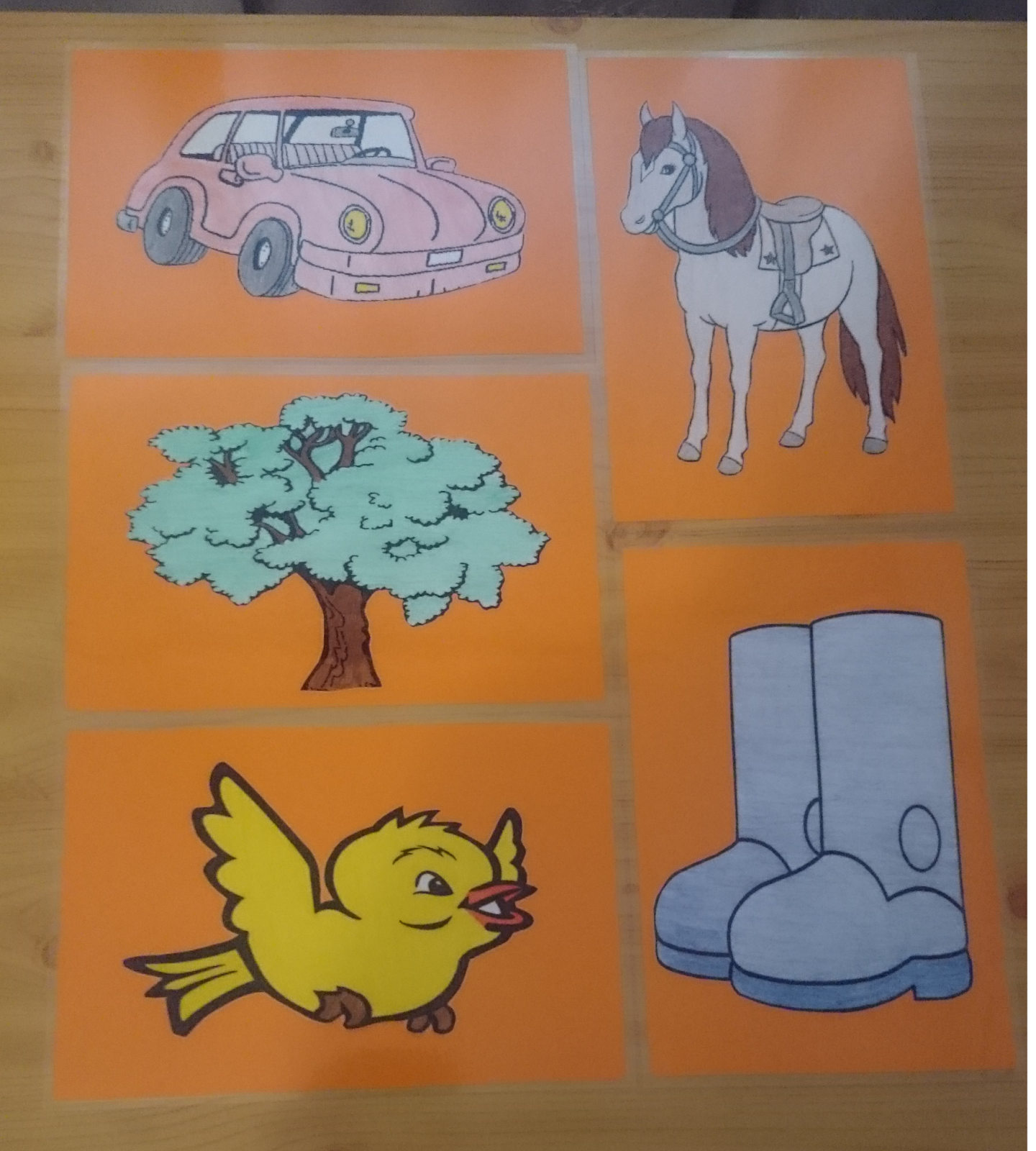
 In addition, i want to show you the flashcards i use in classroom in order to work and improve the pronunciation. Children can use and touch them, so I have decided to laminate the flashcards in order to avoid they can break them. So in this way I will be able to use them for a long time.


Long vowels


Long vowels


Short vowels


Short vowels


Consonants


Consonants


 See you!
 M.R.M.

Saturday, 26 September 2015

The First lesson and my English Icon.

   TEACHING YOUNG LEARNERS
Hi everyone!
   
  I'm Mariló and I'm studying Nursery Education at the University of Extremadura. 
  I've chosen to specialize in teaching English to very young learners.
  In this blog I'm going to tell you about a really good book which we are using in our classes and with it we are learning many things related with the teaching in the early childhood. 
  To begin, we´re working with the book "English for Primary Teachers", whose authors are Mary Slattery and Jane Willis.

In the first lesson, they tell us how is the learning in childhood and how we have to keep this in mind to teach and to improve the English in the pupils.

In addition the authors teach us greetings to Start our sessions in English and for that we can use routines about the weather, the date or to check the roll too. 

Also some forms of addressing them and several ideas to end our classes like singing a song because the learning will take place in a more natural, fun and effective way!
To organize the classroom for example giving some instructions in the same way that we make in our mother tongue and to asking permission when they need to go to the toilet.

As i have said before, to End the lessons we can put a song in the interactive display but also we can use some phrases to tell them that the class has ended, for instance, phrases with else (something else?) or with expressions like "That´s all for today" "Ok, now stop",....

Moreover they highlight the differences between teaching to Young Learners and Very Young Learners, being that we must speak pretty slowly and repeat a lot when we work in nursery education. And it is useful providing them fun activities where they have to touch and to feel the materials, because they will learn while they are playing.

And if we are beginning the course we can make dynamics where they introduce themselves to encourage the confidence and to know their peers.


By last, I want to show to you the icon which I use to work English in my classroom. It is a pink of England flag and when I wear it everyone has to speak in English.


My icon

My icon


See you round here soon!


 M.R.M.