
Good afternoon to everybody!
This time, I'm going to tell you about the second lesson. In it, we´ve learnt how use "Listening and do". So we can give instructions in English to children like sit down, move around or stand up. Maybe at first they don´t understand us so much, thus It´s really important helping of our body language with gestures, for example.
On other hand we could work "Listening and identifying", where pupils had to recognize and point several objects, clothes, colours, classroom furniture, and so forth, which teacher has mentioned.
This is so positive, because they practise listening, improve vocabulary and they associate sound with the meaning itself. In addition, you can encourage good behaviour and introduce grammatical notions teaching them the singular and plural or the gender, for example with simple sentences: I have one pencil, María has two pencils.
Furthermore, in nursery education we can´t forget Total Physical Response through "Listening and doing". Children must follow instructions are given by the teacher, so they love it because it´s like a game and they´re enjoying with that.
It's easy to understand for the reason that movement and language go together. You can choose between many kind of activities and use them in different situations: To follow the leader, to make a break, to work routines, to arrange the class, to work vocabulary,...
Besides,
we can work the mime, with Listening and performing/ miming
activities, for example using a topic that children know really well.
So we will give them some instructions, depending on the progress or
the level they will be more complex or easier, and then they must
mime those actions. We can choose many real situations like a
typical morning routine, songs, stories, chants, ...
Or the Listening and responding
games, where pupils need to pay attention while teacher is
explaining and telling them they must do. For example games like
"Simon says" or to identify if a thing is wrong or right.
To end, in our lessons it is pretty
important we speak slowly to children and repeat a lot, so they get
understand all much better. And the other hand we must bear in mind
that we can use the mother tongue in specifics situations when we
need to explain an activity or to comfort a child, for example.
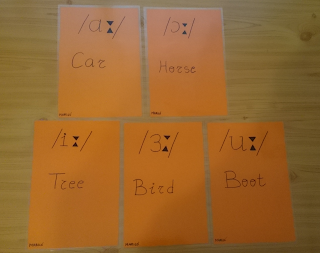
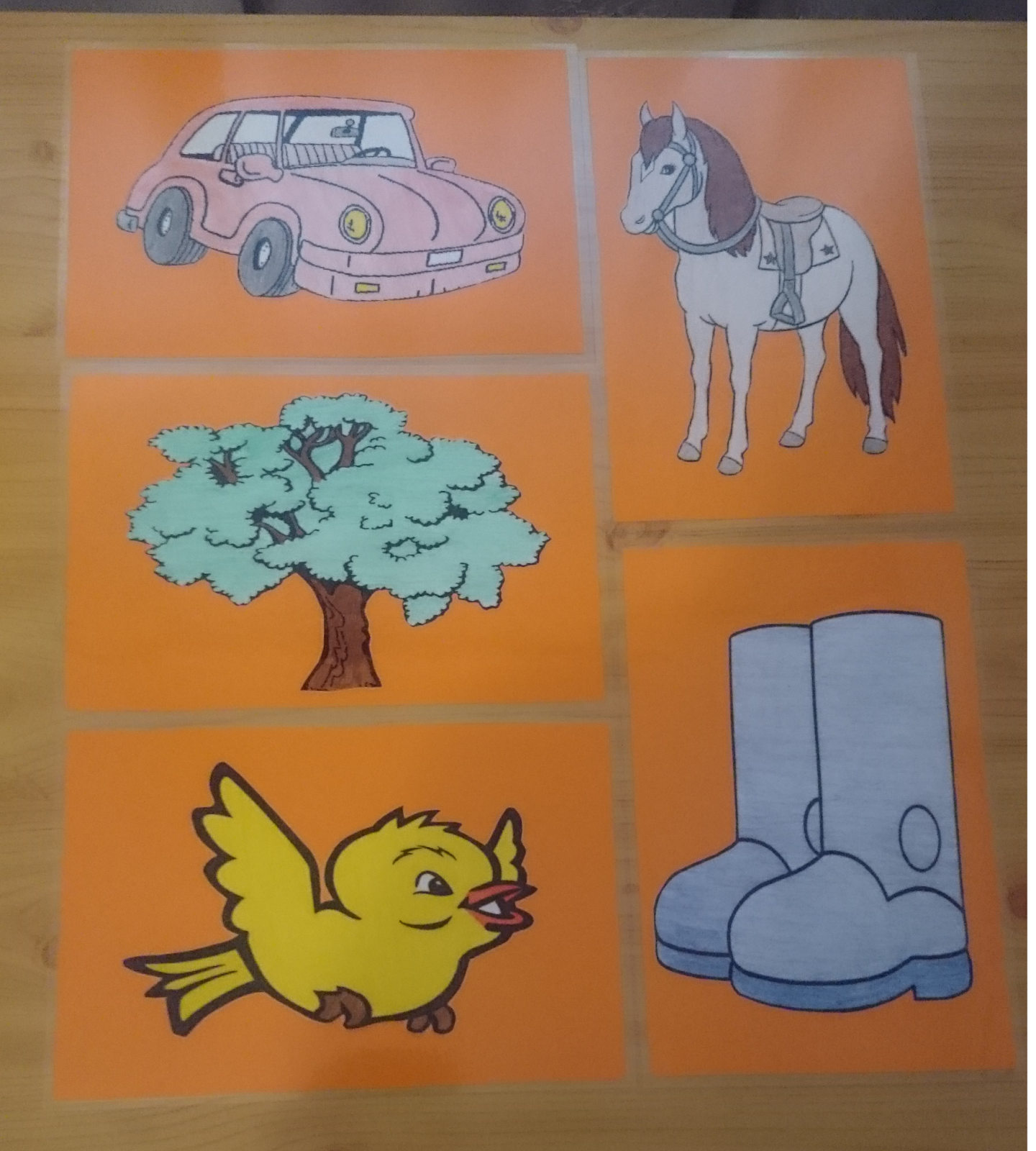
In addition, i want to show you the flashcards i use in classroom in order to work and improve the pronunciation. Children can use and touch them, so I have decided to laminate the flashcards in order to avoid they can break them. So in this way I will be able to use them for a long time.



 |


See you!
M.R.M.


